Greenlight: For Families
- 4.7
- Rating
- 1.00M
- Installs
- Free
- Price

 Analysis by App-foxy
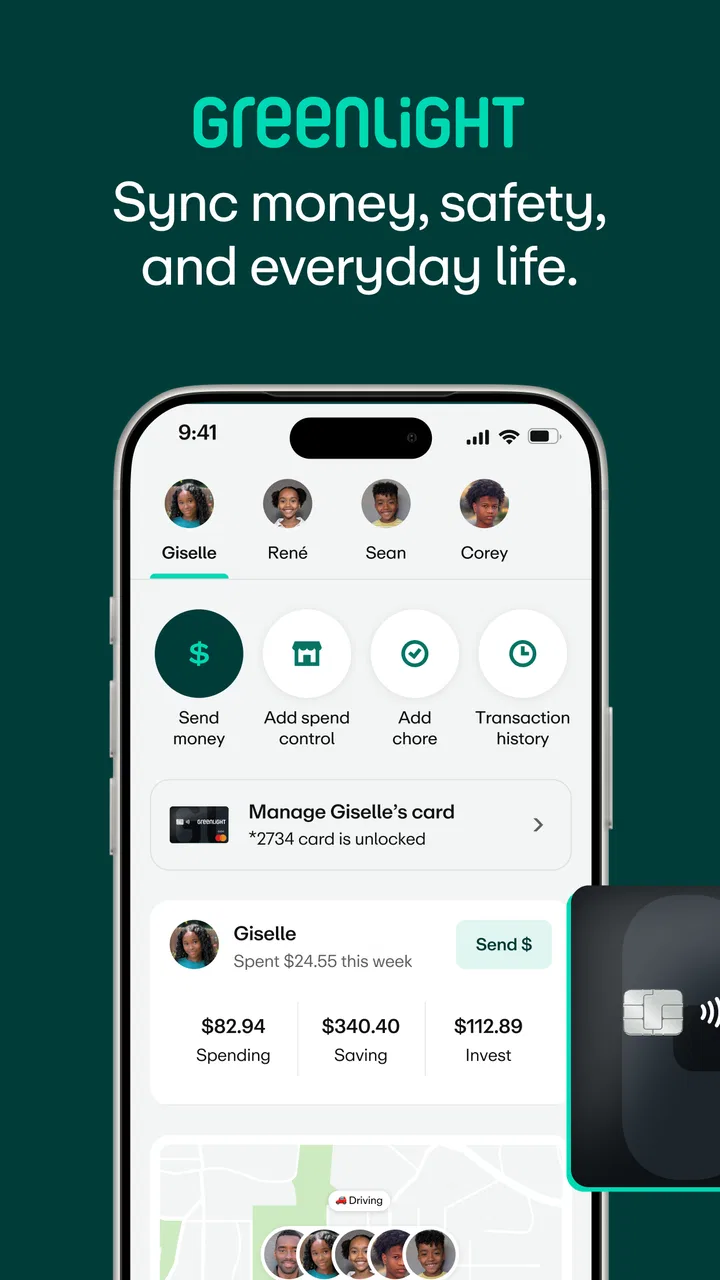
Giving a child a first payment card can feel like a small step with surprisingly large consequences. I approached Greenlight: For Families as a finance app for parents who want to introduce spending without handing over complete independence on day one. Its basic idea is straightforward: a parent manages the experience through the app while a child or teenager uses the associated debit card. The interesting question is not whether that sounds useful during the first week, but whether it still helps once the excitement of a new card has worn off.
My overall impression is that it works best as a conversation tool wrapped around everyday spending. The card is only one part of the experience. The real value comes from deciding how money reaches a child, what it can be used for, and how often both sides check in. That also means the app demands more parental involvement than a normal bank account or a simple prepaid card. If you want a set-it-and-forget-it solution, this may feel like work. If you want a controlled way to build financial habits, it has a stronger case.
What the first week feels like
The first few days are naturally the most engaging. A child gets something tangible that looks and behaves more like an adult payment method, while the parent keeps a visible role in the decisions behind it. That balance is the central appeal. Instead of giving cash and hoping it survives the week, or allowing unrestricted access to a bank account, the family can make the arrangement part of a larger learning process.
You May Also Like

 Blood Strike: 2.5 Anniversary
Blood Strike’s Loadouts Turn Every Drop Into a Tactical Gamble
A close look at Blood Strike’s custom loadouts: how fast access to signature weapons reshapes its battle royale rhythm, rewards preparation, and narrows the gap between fights.

 Pandora - Music & Podcasts
Pandora’s Music Is Easy to Start, but Harder to Recover
Pandora’s strength is its low-effort path from a seed to a station. Its weak spot is how much confidence it asks you to place in connection, setup, and quiet recovery.

 8 Ball Pool
 Is Built on Rivalries, Rematches, and Routine
A close look at the rivalries, rematches, shared routines, and unanswered safety questions that turn a quick pool match into a persistent mobile community.

 Samsung Music
’s Quiet Strength Is Playing What You Already Own
Its reach comes less from spectacle than from dependable access to a personal library. That simplicity is both the app’s strongest retention engine and its ceiling.

 AccuWeather: Weather Radar
AccuWeather Review: A Quick, Clear Forecast for Everyday Decisions
For everyday plans, the best forecast is the one you can understand quickly. AccuWeather makes rain timing, radar, and local conditions easy to act on, with a few trade-offs.

 Hill Climb Racing
Why Hill Climb Racing Still Turns Crashes Into One More Run
A tiny car, a bumpy hill and one more upgrade: Hill Climb Racing keeps resurfacing because its simple chaos makes every near-miss feel personal.
More From Our News Desk



I think the strongest early use case is a child who is beginning to ask for more control over small purchases. Snacks after school, a low-cost item during a family outing, or a personal contribution toward something they want can become practical lessons rather than abstract discussions. The parent can stay involved without needing to approve every tiny choice face to face. That creates a useful middle ground between cash and full financial independence.
The app is free to download, and it is aimed at Everyone, which makes its presentation approachable for a broad family audience. It comes from Greenlight Financial Technology, Inc., and has been available since December 23, 2016. Those details matter less than the way the product fits into a household routine, but they do show that this is not a brand-new experiment looking for its identity.
One tip I would use from the beginning is to agree on the rules before the first payment. Decide which spending is considered personal, which purchases need a conversation, and whether money is connected to chores, allowances, gifts, or a mixture of these. If those decisions remain vague, the app can become a source of arguments rather than a way to make expectations clearer.
Another useful approach is to start with a limited purpose instead of treating the card as a complete replacement for every form of pocket money. For example, a parent might use it for discretionary spending while keeping larger purchases as a separate family discussion. This gives the child room to practice without making every financial mistake feel serious.
The first-week appeal also comes from visibility. A parent can use the app as a prompt to ask what a purchase was for, whether it was worth it, and what the child might choose next time. That is more valuable than simply watching a balance. A transaction list by itself does not teach judgment; the conversation around it does.
Where the early experience needs patience
There is a learning curve for both sides. A child may initially see the card as permission to spend rather than as a tool with boundaries. A parent may assume that setting up the account is the end of the job, only to discover that the educational value depends on follow-up. The product cannot create a spending habit automatically. It gives the family a structure, but the family still has to use it.
I would also avoid introducing it during a busy or emotionally charged period, such as just before a trip when everyone is rushing. The first setup and first rules discussion deserve enough attention that the child understands what the card represents. A rushed launch can create confusion about available money, expected responsibilities, or what happens when the balance reaches zero.
For teenagers who already use a conventional bank account confidently, the supervised model may feel restrictive. That is not a flaw for younger users, but it becomes an important question of timing. The right product is not always the one with the most control; it is the one that matches the child’s current readiness and the parent’s willingness to remain involved.
Why it can remain useful month after month
The lasting value depends on whether the app becomes part of a repeatable routine. I found the strongest long-term argument in the way it can turn irregular money conversations into regular ones. A monthly allowance, a recurring check-in, or a review before a major purchase gives the child repeated chances to connect choices with consequences.
That repetition is more important than novelty. One successful purchase does not teach budgeting. Several ordinary weeks, including weeks where the child spends too quickly and has to wait, can make the lesson memorable. The app is particularly suitable for families that want to make those moments visible without turning every mistake into a lecture.
A practical routine could be as simple as checking the balance together at the same time each week. Ask three questions: what was spent, what is still planned, and whether anything should change. This keeps the review short enough to survive a busy schedule. It also prevents the parent dashboard from becoming a surveillance tool that the child never sees or understands.
The app has attracted a substantial user base, with over one million installs, and its average rating is 4.7 from around eighty-two thousand ratings. I would not treat those figures as proof that it will suit every household, but they do suggest that the supervised family-card concept has broad appeal. The more meaningful test is whether your family can maintain the habits the app encourages.
One non-obvious strength is that it can help separate spending autonomy from financial secrecy. A teenager may have room to make ordinary personal purchases while the parent still has an agreed view of the overall arrangement. That distinction can reduce the temptation to inspect every decision while preserving enough oversight for safety and teaching. It works best when the boundaries are openly discussed rather than silently imposed.
Another useful trade-off appears when children have different levels of maturity. A family may want a shared framework while giving each child different expectations. The app can support that kind of gradual independence more naturally than handing everyone identical access. However, the parent still has to explain why the rules differ. Without that explanation, separate limits can feel arbitrary and cause resentment.
I also see value in using the card for planned goals rather than only immediate consumption. A child can decide to hold money for a larger personal purchase and learn that saying no today creates options later. The app does not replace the parent’s coaching, but it gives those choices a concrete place to happen. That makes an otherwise vague lesson about saving feel connected to real life.
When a different option may be better
A regular bank account may be a better fit for an older teenager who needs to learn how traditional banking works and is ready for less parental supervision. Cash may still be better for a very young child who is learning basic counting and physical money management. A simple prepaid arrangement can also be preferable for a parent who wants fewer decisions and does not plan to use spending as an ongoing teaching opportunity.
Greenlight is most convincing when the family wants a managed transition. It is less compelling when the only goal is to provide a payment method. In that situation, the educational structure may feel like unnecessary administration. Likewise, families with irregular income or unpredictable allowances may find that a fixed routine is harder to maintain than expected.
The maintenance burden parents should expect
The recurring work is not difficult, but it is real. Parents need to keep the rules understandable, notice when the arrangement no longer fits the child’s age, and make time for occasional reviews. A system that begins with close supervision may need to loosen gradually. If nothing changes as the child becomes more capable, the card can start to feel like a permission system rather than a path toward independence.
I would schedule a short review every few months rather than waiting for a disagreement. Discuss whether the spending boundaries still make sense, whether the child understands the balance, and whether the current arrangement encourages the behavior you want. This is one of the most important maintenance habits because children’s needs change faster than many financial routines do.
The current version is 8.0.0 and requires iOS or Android version 10 or later. For most supported devices, that requirement should be straightforward, but it is still worth checking the family’s phones before building the system around the app. A payment tool is only useful when the parent can reliably access it. If one caregiver uses an older device, that practical detail can become a source of friction.
Parents should also decide who is responsible for monitoring the account. In a two-parent household, unclear responsibility can lead to duplicated decisions or missed checks. A simple agreement about who handles routine reviews and who joins larger conversations keeps the app from becoming another household task that everyone assumes someone else is doing.
Maintenance also includes emotional boundaries. The parent should not use every transaction as an opening to criticize taste, snacks, or small mistakes. If the child learns that every purchase will trigger judgment, they may stop engaging honestly. The most productive use is selective: focus on patterns, safety, and agreed limits, while allowing ordinary low-stakes choices to remain ordinary.
Where fatigue can build
The biggest source of fatigue is repetition without progress. If the parent has to explain the same rule every week, the problem may not be the app; the rule may be too complicated, unrealistic, or disconnected from the child’s actual life. Simplifying the arrangement is often better than adding more oversight. A small number of clear boundaries is easier to remember than a long list of exceptions.
Another source of tension is the difference between parental visibility and parental control. Some families will appreciate being closely involved, while others may find that the child never gets a genuine chance to make decisions. I would treat the app as a framework for staged independence, not as a permanent way to approve or reject every purchase. The exact level of involvement should change as trust develops.
There can also be fatigue when the card is tied too closely to chores. Linking money to responsibilities may be useful for some families, but not every household task needs to become a transaction. If every contribution is priced, children may focus on payment rather than shared responsibility. I would use the app to support a broader allowance conversation, not to turn family life into a spreadsheet.
Teenagers may eventually outgrow the supervised approach, and that transition needs to be handled deliberately. Moving to a conventional account or another financial product may be the right next step when the child can manage money with less oversight. Staying with Greenlight simply because it is familiar can delay a lesson the family actually needs: operating within a system that offers more independence and responsibility.
Privacy is another point worth discussing within the family. A parent-managed financial tool naturally gives adults more visibility than children may have in a normal peer-to-peer payment arrangement. That can be appropriate for safety, but older users deserve to understand what oversight means in practice. A clear conversation about privacy is healthier than pretending supervision is invisible.
My long-term verdict
After the first card transactions stop feeling exciting, the product earns its place through routine. I would recommend it to parents who want a guided introduction to spending, saving, and personal responsibility, and who are prepared to revisit the arrangement instead of treating setup as a one-time task. Its strongest quality is not that it makes a child feel grown-up; it gives the parent and child a shared structure for discussing money before larger mistakes become expensive.
The app is less suitable for families seeking complete simplicity, older teenagers who are ready for a standard bank relationship, or parents who do not want regular financial conversations. In those cases, a conventional account, cash, or a simpler prepaid option may be more appropriate. The supervised design is the reason to choose it, but also the reason some users will eventually need to move on.
Its free price makes trying the basic experience less intimidating, while the Everyone age rating keeps the product broadly accessible as a family finance tool. Still, those entry points should not obscure the commitment involved. The recurring value comes from consistent allowances, thoughtful limits, occasional reviews, and a willingness to let children make manageable mistakes.
My final judgment is positive, with one condition: use it as a teaching relationship, not merely as a card-management screen. The lasting benefit comes from the habit around the app, not the novelty of the card itself. When parents keep the rules simple and gradually hand over more responsibility, Greenlight can occupy a useful middle stage between cash and independent banking. When that involvement disappears, much of what makes it different from ordinary alternatives disappears with it.
For families ready to make money a regular, calm topic at home, I think it is worth considering. It offers enough structure to make early independence safer while leaving room for real choices. Just go in knowing that the most important feature is not something you tap: it is the ongoing conversation between parent and child.
FAQs for Greenlight: For Families
01What is Greenlight: For Families and how does it work?
Greenlight: For Families is a comprehensive app designed to help parents manage their children's finances and teach them financial responsibility. It offers features like chore management, savings goals, and real-time spending notifications. Parents can set spending limits, while kids learn to budget and save. It’s a practical tool for financial education.
02Is Greenlight: For Families safe for my child to use?
Yes, Greenlight: For Families prioritizes security and privacy. It uses bank-level encryption to protect sensitive information and provides parental controls to monitor and manage your child’s spending. The app ensures that all transactions are secure, allowing parents to oversee their child's financial activities safely.
03Can multiple children be managed under one Greenlight account?
Absolutely, Greenlight allows parents to manage multiple children under a single account. Each child can have their own individual profile with personalized settings, savings goals, and spending limits. This makes it easy for families with multiple children to track and guide each child’s financial habits effectively.
04What are the costs associated with using Greenlight: For Families?
Greenlight: For Families operates on a subscription model. While there is a monthly fee, it provides numerous features that justify the cost, such as financial education tools and robust parental controls. Some features may have an additional cost, so it's best to review the pricing details on their official website before subscribing.
05Does Greenlight: For Families offer any educational resources?
Yes, one of the app’s primary goals is to educate children about financial literacy. Greenlight includes educational resources such as quizzes, tips, and interactive lessons on saving, investing, and budgeting. These resources are designed to make learning about finances engaging and practical for young users.
Pros
- User-friendly interface for all ages.
- Comprehensive parental controls.
- Real-time location tracking.
- Customizable screen time limits.
- Educational content recommendations.
Cons
- Limited features in free version.
- Occasional app crashes reported.
- Requires constant internet connection.
- Can drain device battery quickly.
- Privacy concerns with data collection.

Greenlight: For Families
Gallery